The Challenge
For the past 10 years, Detroit Diesel has achieved 1-2% of energy reduction annually, with a commitment to build on this trend over the next 10 years. To continue achieving savings, Detroit Diesel signed up with its local utility, Detroit Edison (DTE), to participate in a six-month Strategic Energy Management (SEM) program. Participants received free technical support and financial incentives to implement energy-efficiency improvement opportunities.
The Solutions
Three focus areas were considered during the SEM program: steam, HVAC, and compressed air.
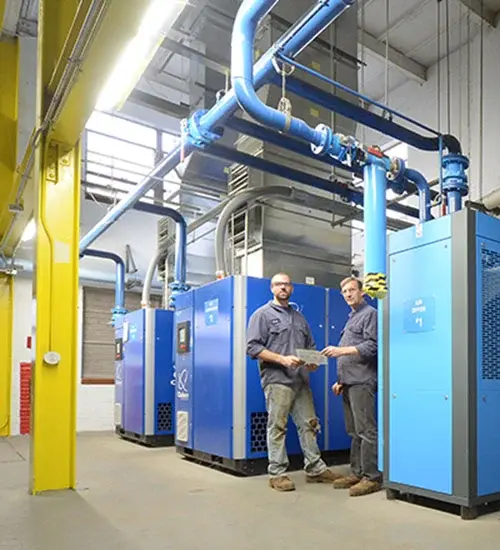
The steam system was evaluated across two areas: the powerhouse steam operations and the process washer and dip tank conversions. The team implemented set point reductions and equipment upgrades to reduce the use of high-pressure (HP) steam. The HVAC system improvements focused on two areas: overall system operations and controls, chiller tube brushing, and chiller set point changes. The compressed air measures included updates to the compressor sequencing strategy, a compressed air leak repair campaign that enabled the plant to lower the system pressure, and the installation of a new variable frequency drive-equipped compressor.
Through Detroit Diesel’s participation in the SEM program, the facility received the following types of technical support:
• Monthly assistance in analyzing energy performance data
• Identification of both low and no-cost opportunities for energy performance improvement
• Review of the facility’s energy use to identify specific areas of high energy use and opportunities for improving energy performance
• Review the facility’s energy information technology infrastructure and look at areas for improvement
• Development of a sustainable, continuous energy management process
The Results
The Energy Team continues to evaluate the plant’s SEUs to uncover more opportunities. The SEM program enabled Detroit Diesel to establish a formal process for energy planning. Detroit Diesel has further demonstrated its commitment by certifying its plant to the standards of the ISO 50001 Energy Management System and Superior Energy Performance (SEP). As a result of their 50001 certification and participation in the DTE program, Detroit Diesel has a framework to follow for energy planning and ongoing audits ensure that Detroit Diesel will continue improving the facility’s operational processes and drive additional energy savings.
Detroit Diesel completed Cycle 1 of DTE’s SEM program and will move on to Cycle 2; a further one-year engagement focused on continuing the work that has been started. With energy planning processes firmly ingrained into the culture, the next step of SEM will be to continue to implement energy savings projects with a strong focus on Energy Management Information Systems (EMIS) in the plant. This will not only allow for real-time energy information but also significant energy savings through improved system control.
Download the Full PDF >>