The Challenge
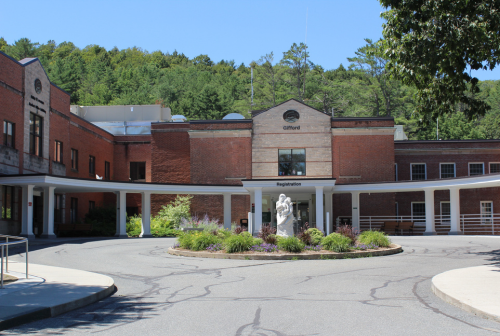
Over time, Gifford Health Care has expanded its offerings to include state-of-the-art services like critical care, women’s health, a birthing center, surgical services, adult day care, nursing home, independent living, and primary care. The healthcare providers employs 600 people across the state.
Since hospitals are critically important infrastructure that needs to operate around the clock¹, they are known for their high energy usage. Gifford is acutely aware of its energy usage and sought out the opportunity to reduce costs while also creating a healthier environment.
The Solution
The healthcare organization has had a long relationship with Efficiency Vermont, who approached Gifford in 2018 about joining its year-long Strategic Energy Management Program (SEM). This cohort program offered Gifford the chance to rethink its approach to energy management, build organization-wide support for energy efficiency, and achieve long term savings. In this model, Gifford was part of a cohort of peer organizations that formed a supportive community for collaborating and sharing SEM best practices. Gifford’s cohort included a total of nine Vermont hospitals.
Gifford worked with experts at Efficiency Vermont to identify opportunities for energy saving capital upgrades and process improvements. For example, along with a mechanical contractor, a steam trap survey was completed to evaluate the performance of the system with estimated savings of nearly $10,000. A big lighting project converted all of the lights to LED and connected them together with a back-net control system that allows for advanced monitoring.
“We’re making a real difference and our employees are engaged. Being more energy minded not only helps us achieve our goals, but also decreases our carbon footprint and contributes to improved air quality in Vermont.” - Patrick Giordano, Gifford Director of Facilities
The Results
SEM has proven to be incredibly valuable for Gifford Medical Center. Employees of the organization are engaged and excited about their improvement, and the facilities managers see the results of savings in the data. The improvements create a healthier environment and allow the hospital to spend the savings on their facility and clients.
The healthcare organization has a five-year energy saving plan to sustain savings and ensure continued improvement of building performance. The plan contains projects such as replacing rooftop units, chillers, heating systems, and other equipment such as improved lighting and HVAC controls. Gifford plans to get re-evaluated for an ENERGY STAR Score to account for the work done over the past six years.
Download the Full PDF >>