The Challenge
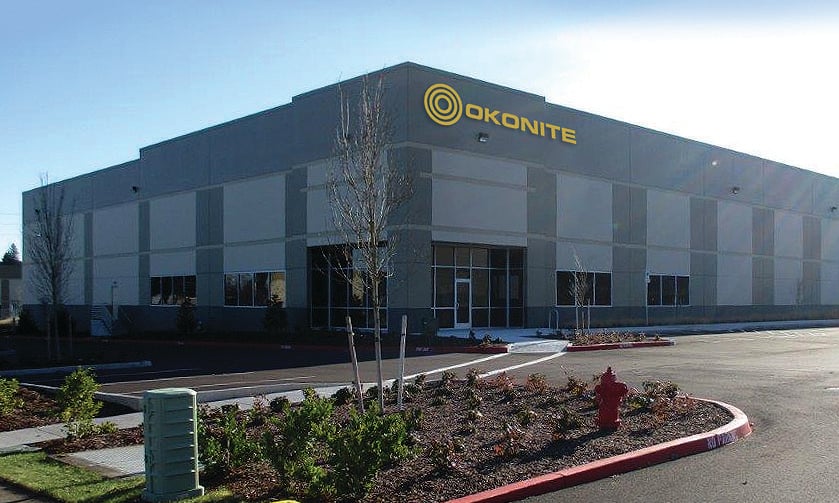
At Okonite, finding ways to continuously manage energy consumption at all of their manufacturing facilities is a priority since the cable manufacturing process (that requires an array of pumps, motors, air compressors, heaters and dryers) is very energy intensive. For example, Okonite’s Cumberland, RI manufacturing plant uses more than 500,000 kWh of energy in a typical month
The Solution
In mid-2019, Okonite began its participation in the National Grid three-year SEM program at its Cumberland, Rhode Island manufacturing facility. National Grid used a cohort model to deliver this program, providing SEM training and guidance over a stipulated period of time to a group of participating companies. There were a total of six participants in Okonite’s cohort.
At Okonite’s Cumberland facility, the implementation of this program was conducted by Cascade Energy. Okonite employees that engaged in the program included the plant superintendent, plant engineer, two manufacturing engineers, the plant manager and the Director of Safety & Environmental Programs. Hourly employees were also involved, helping to identify opportunities and increase awareness of energy conservation practices. Training for this program took place both in a classroom setting and via one-on-one interactions. It incorporated an extensive educational component that was geared towards changing employees’ behavior towards energy savings, and encouraged the use of written procedures, reminders, and data posted both to electronic bulletin boards and signs in different factory locations. In general, Okonite’s monetary allocation to this SEM program has been towards projects where the return on investment (ROI) is projected to be less than two years.
The Results
Through SENSEI, Cascade’s software platform that monitors energy usage at a very granular level, employees were able to see how specific energy conservation projects impact electric and gas usage, even with fluctuation in production levels. According to Okonite, the key factor that makes SEM different from other energy conservation programs is that it accounts for production activity levels.
For Okonite, SEM has proven to be an effective method to reach energy goals. Currently two years into its three-year SEM commitment with National Grid and Cascade Energy, Okonite has learned many valuable lessons along the way, and has come up with strategies to overcome some of the obstacles encountered.
Download the Full PDF >>