The Challenge
Transforming two polymers into high-performance laments one-hundredth the size of a human hair takes a lot of expertise. And energy.
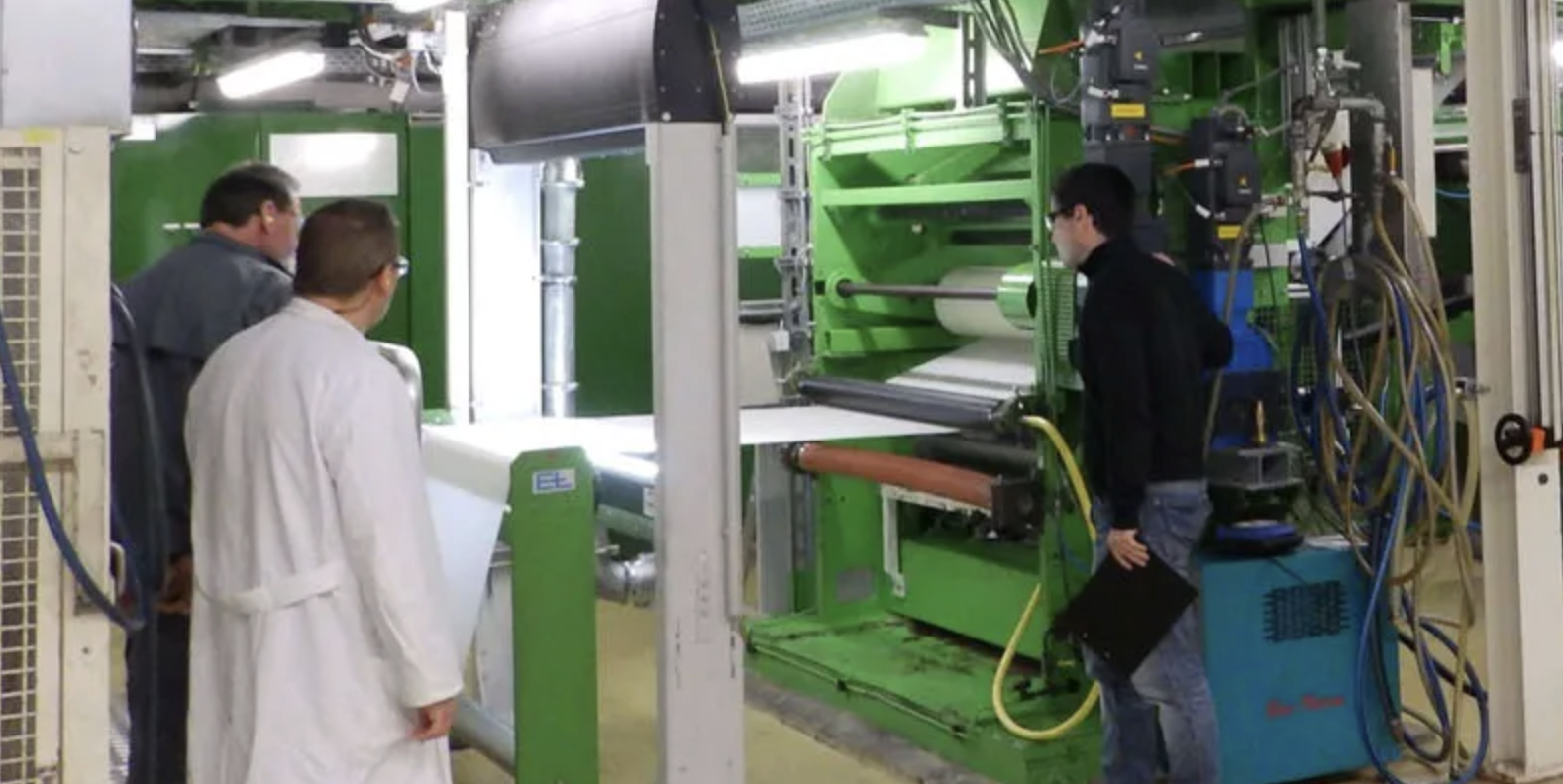
Fitesa’s 30-year-old facility in Washougal, Washington, which transforms polymer pellets into sheets of non-woven fiber for diapers, wipes and filters, had been consuming about 19 million kWh of energy annually. Plant manager Dave Rohrbach said finding ways to be cost competitive is a constant battle essential to remaining a viable player in the industry.
“We are the only non-woven plant on the West Coast, and a large percentage of our customer base is on the East Coast, so we pay a lot of money in freight – since it’s so heavy – to [transport] our product,” says Rohrbach. “A lot of our competition resides on the East Coast, so we have to do a lot of other things to remain cost competitive [for] our customers.”
The Solution
With an energy-intensive production process, Rohrbach knew improving efficiency was a good approach. “It’s obvious that saving a kilowatt of power is going to save money on the bottom line. The problem is organizing your efforts in such a way that you get the biggest bang for the buck.”
Enter Clark Public Utilities, which introduced the company to Bonneville Power Administration’s (BPA) Energy Smart Industrial (ESI) program. BPA’s ESI program works with Northwest public utilities and their industrial customers, offering program management, technical recommendations and financial incentives to advance energy efficiency throughout the region.
A five-person High Performance Energy Management team supported by Clark Public Utilities and technical consultants provided by BPA’s ESI program identified a number of conservation initiatives and the introduction of new systems. In addition, Fitesa met collaboratively with 13 Portland-Vancouver area industrial companies to explore possibilities for energy savings in a High Performance Energy Management group.
The Results
The result: In one year, Fitesa is on track to trim energy usage by 3.5 million kWh annually, or about 19 percent.
“We found significant opportunities to reduce energy usage once we found a way to correlate energy consumption with plant output,” said JD Hisey, the plant’s continuous improvement team manager. “Once it’s set up, it only takes a few minutes a week to monitor and helps us keep our savings plan on track.”
About 30 percent of the company’s energy savings are achieved through continuous improvement initiatives learned during the High Performance Energy Management cohort, initiatives like eliminating leaks in compressed air lines and managing equipment temperatures.
In addition, the ESI program helped Fitesa pursue a capital project replacing aging cooling towers with three efficient chillers and control systems. The company received a $650,516 incentive from Clark Public Utilities through the ESI program, which covered about 70 percent of the chiller system upgrade. The upgrade will save about 2.5 million kilowatt hours of energy annually.
Download the Full Case Study >>